Like below.




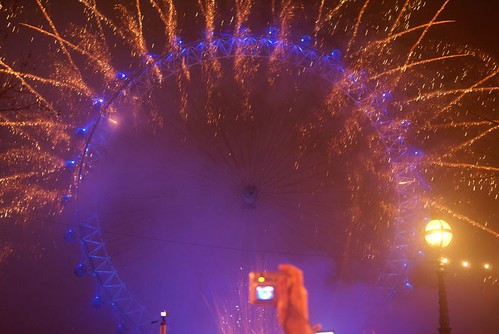 via chinmay22
 Photo via Ian Muttoo

Post Profero:
We were told that it’s easy to produce a piece of utility without a big idea. That can mean that you jump straight to execution, rather than considering exactly how it will be a solid piece and not just throwaway. Its important that we spend time considering exactly what you’re trying to say or do with the utility and how it can be supported.
If you really want to sell an idea, see if you can get it made yourself or with the help of others, particularly if its something that takes existing behavior and attempts to change it. As if you can prove it works in the real world and not just in concept, then it’s a lot easier to sell the work.

Post The Viral Factory:
Making something viral seems to be about gaining an understanding of what makes people communicate and about knowing the culture you are trying tap into.
Not to mention, it’s only a viral if its actually ends up with a huge amount of hits of effects everyday culture.
Does a viral have to be film based, what about a piece of music or those stupid little restaurant vouchers? Although they are not considered ‘creative’ that are very popular and if you could take this idea and transfer it into a more expansive creative idea then you may be onto a winner.
Maybe the best type of viral is to conduct experiments and then showcase those, as if you’re doing something groundbreaking and exciting then you’ll attract attention. This ties into the sponsorship model rather than actually having an end frame at the end. So maybe create this real life activity and although your brand is in the background, it could gain recognition for its understanding.
Sharing content on facebook and such has become a huge deal. If your share a viral, then its saying something about you to others. This is bad but sadly its true. Particularly for younger teens, who can encounter huge amounts of pressure online.

Post R/GA:
They looked at the work that was produced from the briefs we were given by all the agencies during the workshops. The main feedback was that they wanted our work to be more finished visually, which represents the dilemma. As we’ve had several crits were we have been told to stick to the scamps, until you’ve had so much feedback that you know an idea is going to stay in your book. That’s when you work the idea up.
So if those of you who care to read this want to share your personal experiences on the comments section, we’d be interested to see the current trend?

 I recently came across this lovely set of photo manipulations on Relleno De Mono's Flickr page which are some of the nicest bits of photo manipulation I've seen in a while. It reminded me of other instances where, either for political motives (before/after), or for more creative purposes, such as Tom Hanks in Forest Gump, people have taken a part of history and completely altered its significance and meaning. More recently the utterly disappointing Watchmen, had a very nice title sequence which did set a nice scene. I've always liked it in films which you know aren't to be taken too seriously, begin to supplant their reality into ours, which is why this next set of TOYIB's images are just brilliant:


This week we went to Greenroom as part of the d&ad digital workshops and it was an interesting experience.
The brief was for Rowntree's Randoms and the ideas shown by the group showed an improvement in our eyes. So much so that so of the ideas lead us to think about a few things, thus the reason for this post.
Firstly, there was a nice idea about digital screens. It got us thinking about the use of screens for content generation. After all, billboards have normally been used to display messages, not in the creation of them. It’s something that could be very useful for user-generated campaigns, which mostly seem to rely on the user going to a site or filming it on their camera for uploading. Instead you could buy space around the city so that users could partake in the experience during their daily routine. All you’d need is a camera in the board and enabling it to showcase the footage when active. This thought links with this footage that’s been doing the rounds.
Hand from Above from Chris O'Shea on Vimeo.
ARG’s are very nice and can turn out to be amazing campaigns (We created one for our final major project, to help the Science museum attract more adult visitors.) What you should remember is that they need to tap into the culture of those you are targeting if you want them to be a success. In most cases, this means they only work for fanboys of films, music, etc. There is every chance that you could create an ARG for a something with less value, yet it would have to be the most amazing story and pr stunt ever.
Lastly, someone asked a question about keeping up with technology and if it mattered to the CD. He replied with a rather nice answer that we cannot remember but in our head we’d sum it up by saying, It doesn’t matter what technology you are using, what matters is that you are tapping into the culture in the right way.

 Posts
All Comments
Posts
All Comments


